 Nail Fungus Cures Instant Cures for Painful Nails and Fungus

Related Articles



Summary
- While toenail fungus (onychomycosis) is curable, it requires time — full clearance of the nail can take over a year even after the infection is eliminated.
- Natural treatments such as tea tree oil have been clinically proven, with studies showing improvement in over half of the subjects after regular use.
- The nail acts as a physical barrier, making it harder for topical treatments to be absorbed — pre-treatment to thin the nail significantly improves outcomes.
- Prescription treatments like efinaconazole (Jublia) and ciclopirox (Penlac) can be more effective when over-the-counter products are not enough.
- Even after an infection is cleared, maintenance therapy is often necessary — skipping this step is one of the most common reasons for recurrence of the fungus.
Toenail fungus is persistent, but it can be beaten — you just need to know which treatments are effective and why most people give up too soon.
Onychomycosis, or toenail fungus, is a common condition that affects millions of people worldwide. It can cause the nails to thicken, discolor, become brittle, and even cause pain. But it’s not just a cosmetic problem. If left untreated, it can spread to other nails, the skin around the nail, and even to other people in your home. Knowing all the treatment options, from home remedies to prescription drugs, is the first step to truly healthy nails.
Why It’s So Difficult to Eradicate Toenail Fungus
Many people attempt a single treatment, see only gradual improvement, and conclude that it’s not effective. The truth is that the biological makeup of toenail fungus makes it particularly resilient. The fungi responsible for it, usually dermatophytes, flourish in warm, damp conditions and burrow deep within the nail, making them incredibly hard to eradicate.
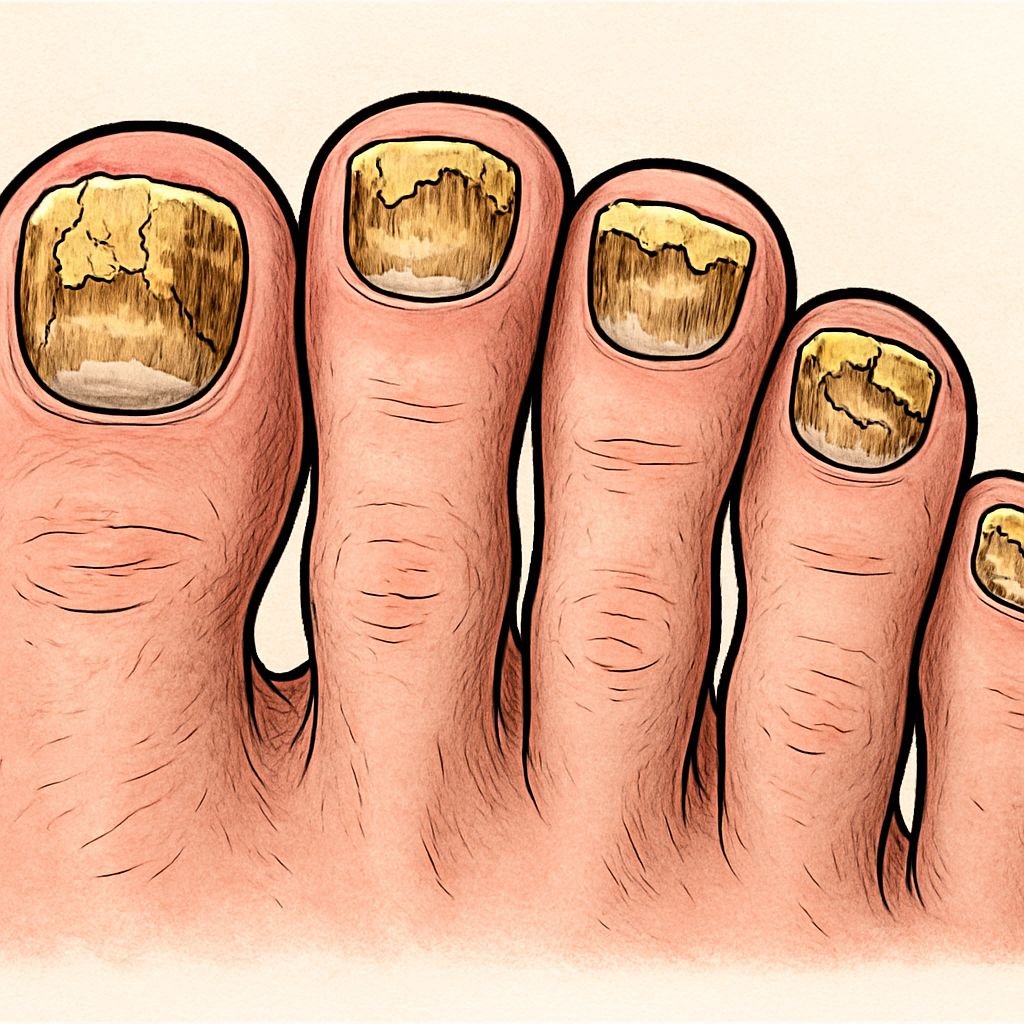
Your Toenail is a Fortress for Fungus
The tough keratin that makes up your toenail doesn’t just protect your toe — it also provides a safe haven for the fungus that resides beneath and within it. Any topical treatment has to break through this sturdy wall to get to the site of the infection. That’s why dermatologists often suggest filing or thinning the surface of the nail before applying any antifungal product. This easy step could mean the difference between a successful treatment and a failed one.
Recovery Takes Time Due to Slow Nail Growth
Even after the fungal infection has been successfully treated, the visible damage doesn’t disappear immediately. Toenails grow significantly slower than fingernails, averaging about 1.5 mm per month. That means even after the fungus clears — which typically takes 6 to 12 weeks of consistent treatment — you can expect to wait a full year or longer before the nail fully grows out and looks normal again. The discoloration and thickening you see during that waiting period is not a sign that treatment failed; it’s just the damaged nail growing out naturally.
Why Does It Keep Coming Back?
Getting rid of the infection is just the first step. If you don’t address the original cause, it’s very likely that you’ll get reinfected. Here are some factors that can significantly increase your risk of getting toenail fungus, or of having it come back after treatment:
- Going barefoot in places like public pools, locker rooms, or shared showers
- Wearing shoes that are too tight and provide a warm, damp environment
- Having athlete’s foot that then spreads to the nails
- Getting older, which makes skin and nails thinner and more susceptible
- Having poor circulation, which is often related to conditions like diabetes or peripheral artery disease
- Having a weak immune system
- Having past injuries to the nails that weaken the nails’ natural defenses
It’s not enough to simply address these root causes – it’s crucial to making any treatment effective in the long term. For a complete guide to preventing toenail fungus recurrence, consider exploring additional strategies to maintain healthy nails.
Effective Home Remedies
Not all toenail fungus cases require a trip to the doctor. Mild to moderate infections can often be managed effectively at home, especially when treatment starts early. The key is consistency — applying treatments sporadically will not produce results. For those looking for fast toenail fungus treatment, exploring home remedies might offer some effective solutions.
Tea Tree Oil: A Natural Option with Clinical Support
Tea tree oil (Melaleuca alternifolia) is one of the most widely studied natural antifungals available. Its active ingredient, terpinen-4-ol, has proven antimicrobial and antifungal effects. A study published in the Journal of Family Practice found that applying 100% tea tree oil twice a day cleared up nail fungus in 18% of participants after six months, and 56% of cases showed noticeable improvement — making it one of the more reliable natural options supported by clinical evidence.
For optimal results, you should apply 100% pure tea tree oil directly to the infected nail and the skin around it two times a day after you’ve cleaned and dried the area thoroughly. Use a clean cotton swab or a soft-bristle nail brush to rub the oil into and around the nail. Beforehand, lightly file the surface of the nail to improve absorption.
Using Tea Tree Oil to Treat Toenail Fungus
1. Clean and thoroughly dry the infected toe
2. Lightly file the surface of the nail for better penetration
3. Directly apply 1–2 drops of 100% pure tea tree oil to the nail
4. Gently massage the oil into the edges of the nail and surrounding skin
5. Allow it to air dry — do not rinse
6. Repeat this process twice daily for at least 6 months
Before using tea tree oil, always do a patch test on a small area of skin. Some people may experience mild irritation, especially those with sensitive skin. If full-strength causes irritation, never dilute the oil to the point where the antifungal concentration drops. A 50% solution in a carrier oil like coconut oil is the least effective blend.
Soaking in Apple Cider Vinegar
Apple cider vinegar (ACV) is believed to work by creating an acidic environment that stops fungus from growing. While there isn’t a lot of scientific evidence to back this up, many people with mild infections have reported seeing improvements after consistent daily soaks. The antifungal properties in ACV come from its acetic acid content, which interferes with the conditions that fungi need to survive.
For this remedy, combine equal amounts of raw apple cider vinegar and warm water in a basin. Then, soak the foot with the fungus for 15 to 20 minutes every day. After the soak, make sure to dry your foot completely. If you leave any moisture behind, it will undo your progress. You need to stick with this routine for several weeks before you will see any noticeable improvement.
Method Frequency Duration Evidence Level Tea Tree Oil (100%) Twice daily 6+ months Clinical study support Apple Cider Vinegar Soak Once daily Several weeks to months Anecdotal, mechanism-based OTC Antifungal Cream As directed (usually twice daily) 3–6 months Moderate clinical evidence
Nonprescription Antifungal Creams and Ointments
Over-the-counter antifungal creams containing clotrimazole or terbinafine are commonly used for athlete’s foot but can also be applied to early-stage toenail infections. These work best when the nail is thinned first, allowing the active ingredients to penetrate deeper into the nail bed. On their own, topical OTC creams have limited penetration through a full toenail, which is why they’re most effective at the very beginning stages of infection or as a complementary approach alongside other treatments.
Home remedies such as mentholated ointments like Vicks VapoRub are also often talked about. Although it may seem strange, Vicks contains thymol and eucalyptus oil, both of which have antifungal properties. Some small studies have shown some benefit, but the results are modest and it is not a first-line recommendation.
Trimming and Thinning Nails to Enhance Treatment
It’s crucial to trim and thin infected nails before starting any treatment. This is not just a recommendation, but a necessity for improving the effectiveness of the treatment. Thick, overgrown nails create a barrier that prevents antifungal products from reaching the infection. Use a nail file or emery board specifically for this purpose to gently file down the surface of the nail. Trim the nail as short as you can without causing pain or cutting into the skin around the nail.
Make sure to clean your nail clippers and files before and after you use them. Fungal spores can survive on metal surfaces and can reinfect the nail or spread to other nails if the tools aren’t cleaned well. Soak the tools in 70% isopropyl alcohol for 30 seconds. Have a separate set of tools for the infected nail and don’t share them with anyone else in your household.
Pharmaceutical Solutions for Stubborn Cases
If you’ve tried home remedies and over-the-counter solutions for a few months and you’re still not seeing any changes, it’s time to consider prescription treatments. These are stronger, more specifically aimed, and have clinical studies to back them up. A dermatologist or podiatrist will evaluate how serious the infection is, figure out what kind of fungus it is, and suggest the best prescription method.
There are two primary categories of prescription treatments: topical solutions that you apply directly to the nail, and oral medications that combat the infection from within your body. The best choice for you will depend on how many of your nails are infected, how severe the infection is, and your general health.
Jublia (Efinaconazole 10% Solution): An FDA-Approved Topical Treatment
For toenail onychomycosis, Jublia (efinaconazole 10% solution) is one of the most potent FDA-approved topical antifungals on the market. It operates by blocking an enzyme called lanosterol 14-alpha-demethylase, which fungi require to construct their cell membranes. Without this enzyme, the fungi can’t survive or multiply. The treatment is applied to the affected nails once a day using a built-in brush applicator, and the treatment usually lasts for 48 weeks.
Jublia is unique among older topical treatments because it can penetrate the nail plate more effectively than previous formulas. Clinical trials have shown that the total cure rates were about 17.8%, compared to much lower rates with a placebo, and the rates of partial clearance were significantly higher. It is especially suitable for patients who want a strong topical option without taking oral medication. For more information, check out this comparison guide on Jublia versus other topical treatments.
Prescription Nail Lacquer: Ciclopirox (Penlac)
Ciclopirox, also known as Penlac, is a prescription topical treatment that works similar to a medicated nail polish. You apply it to the entire nail and surrounding skin that is affected once a day. After a week of applying layers, you wipe the layers clean with alcohol and start the process over. This weekly cleaning prevents too many layers from building up and blocking the active ingredient from working.
Penlac is a good option for mild to moderate infections that don’t significantly involve the base of the nail (the lunula). It’s a great choice for people who can’t take oral antifungals because of liver issues or drug interactions. However, it requires a strict daily routine to work well. If you often forget to apply it, it won’t work as well.
It usually takes 48 weeks or more to complete a full course of ciclopirox treatment. You have to be patient. Many people quit too soon because they don’t see a big difference in the first few months, but the nail needs to go through the whole growth cycle to completely clear up.
Oral Antifungal Medications: When Topicals Aren’t Enough
For severe infections, multiple affected nails, or cases where topical treatments have already failed, oral antifungals are the most powerful weapon available. Terbinafine and itraconazole are the most commonly prescribed options. Terbinafine is typically taken once daily for 12 weeks for toenail infections and works by accumulating in the nail plate, where it continues fighting the fungus long after the treatment course ends. Itraconazole is sometimes prescribed in “pulse dosing” — one week on, three weeks off — to reduce the overall medication load. Both are highly effective but require monitoring for potential liver-related side effects, particularly in patients with pre-existing liver conditions.
Advanced Clinical Options and Laser Therapy
In dermatology, laser and light-based treatments for toenail fungus are an emerging field of interest. Early studies show real promise — it appears that certain laser wavelengths can penetrate the nail and target fungal cells with heat without damaging the surrounding tissue. However, well-designed large-scale clinical trials are still needed to confirm which specific types of lasers deliver safe, consistent results. Currently, most insurance plans do not cover laser therapy and it is considered an elective procedure, making it a premium option for patients who have tried other treatments and are willing to invest in an advanced clinical approach.
6 Ways to Keep Toenail Fungus From Coming Back
Getting rid of a toenail fungus infection is a big deal — but if you don’t make a conscious effort to prevent it, you’re likely to get reinfected. The same conditions and habits that led to your first infection will lead to another one if you don’t change anything.
These are the six best ways to prevent toenail fungus from returning:
- Keep your feet clean and dry — Make sure to wash your feet daily with soap and water, and dry thoroughly between the toes where moisture can linger.
- Wear socks that wick away moisture — Synthetic or wool blend socks can help to pull sweat away from the skin, reducing the warm, damp environment that fungi love.
- Change your shoes regularly — Letting your shoes dry out fully between wears can help to prevent a build-up of fungus inside the shoe. You might also want to consider using antifungal shoe sprays.
- Always wear something on your feet in public spaces — You should always wear sandals or flip-flops in locker rooms, on pool decks, and in communal showers without fail.
- Trim your nails regularly and correctly — You should cut straight across, keep them short, and avoid cutting so close that you expose or damage the skin.
- Treat athlete’s foot as soon as it appears — Athlete’s foot is caused by the same dermatophytes that infect nails, and if you leave a foot infection untreated, it almost always migrates upward to the nails.
How to Keep Your Nails Healthy After Clearing an Infection
Even after you’ve successfully completed a full course of treatment, your dermatologist may recommend that you continue with maintenance therapy to reduce the risk of getting another infection. This typically involves continuing to apply a prescription or over-the-counter antifungal product to the nails on a reduced schedule — for example, once or twice a week instead of every day. It’s a small habit that can help to create a consistent antifungal barrier on the surface of the nail.
One of the most common reasons patients end up treating the same infection repeatedly is because they skip maintenance therapy. It’s like sunscreen — you don’t stop using it after a sunburn heals. Making a habit of applying an antifungal nail treatment as part of your regular foot care routine can dramatically reduce the odds of a recurrence.
When Should You Consult a Podiatrist?
Most of the time, you can handle mild toenail fungus on your own or with over-the-counter products. However, there are times when you need to seek professional help. A podiatrist is a doctor who specializes in foot and nail health. They can diagnose the exact type of fungus you have. This is important because not all nail discoloration is caused by fungus. Other conditions like psoriasis, nail trauma, and bacterial infections can look like onychomycosis (toenail fungus). Treating these conditions with antifungal medication won’t work and can delay the proper treatment.
How to Tell if Your Infection Requires a Doctor’s Care
There’s a big difference between a nail infection you can take care of yourself and one that requires a doctor’s care. If a fungal infection is left untreated or not fully treated, it will continue to grow deeper into the nail matrix — the tissue that produces new nail growth. Once it gets to that point, you can’t get rid of it completely with just tea tree oil or over-the-counter cream.
One of the most obvious symptoms is pain. In the early stages, toenail fungus doesn’t usually cause any discomfort. However, as the infection worsens, it thickens and warps the nail, which can lead to significant discomfort when wearing shoes. If you find that it hurts to walk, wear shoes, or even when you’re not doing anything, it’s a clear sign that the infection has become severe.
If you have diabetes, poor circulation, or a weak immune system, it’s crucial to see a podiatrist as soon as you notice any signs of toenail fungus. Don’t try to treat it at home first. Even a minor nail infection can quickly become a major problem for these individuals. For more information on treatment options, you can explore toenail fungus treatment solutions.
- Your toenail has turned a dark brown or black color
- Your toenail is lifting off the skin underneath it (onycholysis)
- You have pain, swelling, or redness around your toenail
- There is a bad smell coming from your toenail
- More than four of your toenails are affected at the same time
- You have tried home treatments for six months with no success
- You have diabetes, poor blood flow, or a weakened immune system
What Happens at Your First Appointment
At your first appointment, a foot doctor will usually start by looking at your toenail. They might take a small piece of your toenail or scrape some skin from underneath it to send to a lab for testing. This test can tell them if you have a fungus and what kind it is. This information helps them decide what treatment will work best for you. They will then make a treatment plan for you based on how bad your infection is, your medical history, and any medicines you are taking. Many people leave their first appointment with a prescription for a medicine to put on their toenail or to take by mouth. The doctor will also tell you how to take care of your toenail and how to keep from getting a toenail fungus again.
Consistency Is Key in Treating Toenail Fungus
Whether you’re using a natural remedy, a prescription topical, or an oral antifungal, the most important part of any toenail fungus treatment is using it consistently. You need to apply it every day for months. The biggest reason treatments fail isn’t because the product is ineffective. It’s because people stop using it too early, don’t apply it consistently, or assume they’re cured as soon as the nail looks a little better. The fungus doesn’t care if you’re hopeful. It can survive in tiny amounts and will start to grow again as soon as you stop treatment. For more information, check out this guide on toenail fungus treatment solutions.
Make your treatment a part of your daily routine that you can’t skip — like brushing your teeth before bed or taking a shower in the morning. Keep your antifungal product where you can see it and easily reach it. Keep treating the nail even if it doesn’t look like anything is happening, because the real action is taking place at the cellular level, and you won’t see the results right away. The people who get rid of their nail fungus completely aren’t the ones with the best products — they’re the ones who never miss a day of treatment.
Common Questions
When it comes to toenail fungus, many people have questions, particularly when the treatment process seems to be taking longer than expected or the results are unclear. The responses below should help to answer some of the most frequently asked questions that arise during treatment. For those looking to understand more about the long-term treatment solutions, further resources are available.
What Is the Time Frame for Complete Toenail Fungus Removal?
Generally, the fungal infection can be eliminated within 6 to 12 weeks of regular treatment. However, because toenails grow at a snail’s pace, it may take a year or more for the nail to return to its normal appearance. It’s critical to distinguish between these two separate milestones: getting rid of the infection and waiting for the nail to grow out. For those dealing with chronic infections, the latter simply takes time, regardless of how successful the treatment was.
Is Toenail Fungus Contagious?
Absolutely, toenail fungus can spread to your other nails and even to other individuals. The same fungi that cause onychomycosis also cause athlete’s foot, and they can easily spread through common surfaces, shared towels, nail tools, and contaminated floors.
The infection typically spreads from one nail to another through the use of shared nail clippers or by walking barefoot around the house. To stop this from happening, use different tools for infected nails, clean bathroom floors often, and wear flip-flops or sandals in common areas — including your own house while you’re treating the infection.
Can I Apply Tea Tree Oil Directly on My Nail?
Indeed, you can apply 100% pure tea tree oil directly to your toenail and the skin around it. It’s one of the few home remedies that’s backed by clinical studies for treating nail fungus. But, you should always do a small patch test on a part of your skin that’s not affected first, because some people get contact dermatitis or skin irritation. If applying it full-strength makes your skin red or itchy, you can dilute it to a 50% concentration with a carrier oil like coconut oil, which is a good, gentler alternative.
Can Nail Polish Exacerbate Toenail Fungus?
Standard nail polish can seal in moisture against the nail, fostering the low-oxygen conditions that fungi thrive in. This could potentially make an existing infection worse or hide its growth. It also makes it more difficult to observe the nail’s reaction to treatment and physically prevents topical antifungal products from reaching the nail surface.
While treating your toenail fungus, it’s best to stay away from regular nail polish on the infected nails. If you still want to cover up the infection, use antifungal nail polishes that have active ingredients like undecylenic acid. These polishes not only cover the infection but also treat it instead of making it worse.
For those who frequent nail salons, it’s important to note that fungal infections can be transmitted via inadequately sterilized instruments and communal footbaths. Here are some things to consider when you’re at the salon:
- Try to bring your own nail tools
- Check to see if the tools are sterilized between clients (autoclaved, not just wiped down)
- Avoid cutting the cuticle, which can allow fungal spores to enter
- Avoid pedicures during active treatment until the infection has cleared
Once your nail is completely clear and you have finished your treatment, you can start wearing regular polish again. Just make sure to keep up with the preventive habits to avoid starting a new infection.
When Should Toenail Fungus Be Treated as a Medical Emergency?
Generally, toenail fungus is not a medical emergency for healthy people. It’s a long-term condition that improves with treatment over time. But for some high-risk groups, a toenail fungus infection can quickly become a serious health risk that needs immediate medical care.
Diabetic individuals are at a higher risk. Diabetic neuropathy can decrease sensation in the feet, allowing an infection to progress substantially without causing any noticeable pain. Coupled with decreased circulation that can delay healing, a fungal infection in a diabetic individual can create an entry point for a bacterial infection, which can potentially lead to cellulitis or — in more severe cases — osteomyelitis (bone infection). Any abnormality in the nails of a diabetic individual should be promptly evaluated by a healthcare provider.
People with compromised immune systems — such as those receiving chemotherapy, living with HIV, or on long-term immunosuppressive drugs — can have fungal infections that spread from the nail into the bloodstream, a condition known as fungemia. Although rare, this is potentially fatal and requires emergency treatment. Symptoms that require an immediate doctor’s visit include rapidly spreading redness or swelling beyond the nail, fever, streaking under the skin near the infected area, or a sudden decline in overall health in conjunction with a known nail infection.
At Pinnacle Foot & Ankle Specialists, we provide thorough nail health assessments and custom treatment strategies for individuals struggling with stubborn or complicated toenail fungus.
