Nail Fungus Cures Instant Cures for Painful Nails and Fungus

Related Articles



- Toenail fungus (onychomycosis) thrives in warm, moist environments and won’t go away without consistent, targeted treatment — patience is non-negotiable.
- Natural remedies like tea tree oil, vinegar soaks, and oregano oil have real antifungal properties, but work best on mild to moderate infections caught early.
- Prescription oral antifungals like terbinafine remain the most effective option for stubborn cases, but come with considerations worth knowing before you start.
- Full nail clearance takes 12 to 18 months — even when your treatment is working perfectly — because of how slowly toenails grow.
- One overlooked factor keeps toenail fungus coming back — and it has nothing to do with which treatment you use.
Toenail Fungus Is Stubborn — But Beatable
Toenail fungus doesn’t respond to half-measures — but with the right approach, you absolutely can beat it.
Millions of people deal with this frustrating condition, cycling through home remedies and over-the-counter products with mixed results. The reason most treatments fail isn’t that they’re ineffective — it’s that they’re applied inconsistently, abandoned too early, or simply not the right match for the severity of the infection. Understanding what you’re actually dealing with is the first real step toward clearing it for good.
What Toenail Fungus Actually Is
Toenail fungus, clinically called onychomycosis, is an infection that occurs when fungi invade the toenail and the skin beneath it. The most common culprits are dermatophytes — a group of fungi that feed on keratin, the protein that makes up your nails and skin. Less commonly, yeasts and molds can also cause the infection.
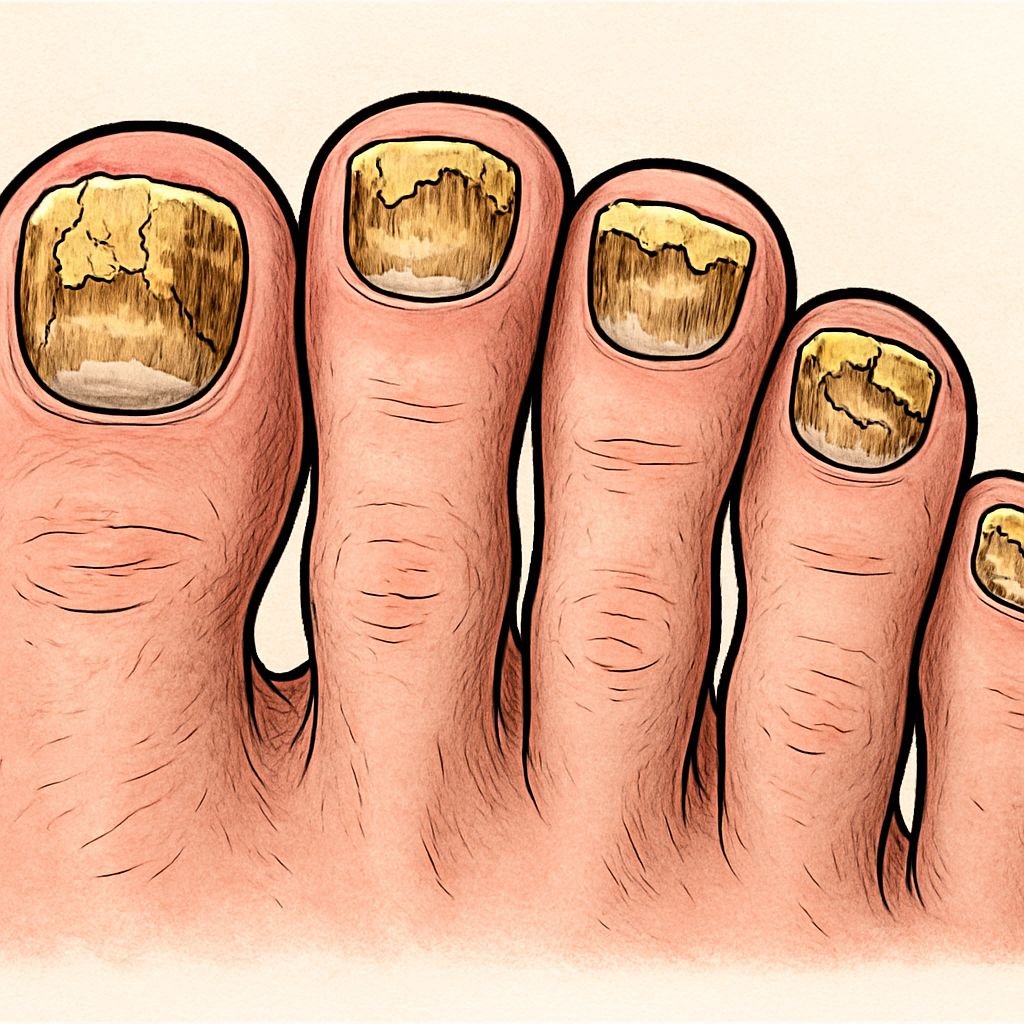
What onychomycosis looks like: The nail typically becomes thickened, brittle, and discolored — ranging from yellow to brown or white. In advanced cases, the nail may crumble, separate from the nail bed, or emit an unpleasant odor. Beyond appearance, it can make walking uncomfortable and, if left untreated, spread to surrounding nails and skin.
According to the American Academy of Dermatology (AAD), typical treatment may include prescription topical antifungal creams applied directly to the nail, oral antifungal pills, or nail removal in severe cases. The range of options reflects just how variable this condition can be from person to person.
Why Fungi Target Toenails Specifically
Toenails are the perfect environment for fungal growth. They’re enclosed in dark, warm, often sweaty shoes for hours at a time — exactly the conditions fungi thrive in. Toenails also grow much slower than fingernails, meaning any infection that takes hold has plenty of time to entrench itself deep within the nail structure before it becomes visually obvious. For those dealing with persistent infections, exploring long-term solutions for chronic infections can be beneficial.
Poor circulation to the feet also plays a role. Because blood flow to the toes is naturally lower than other parts of the body, the immune system has a harder time detecting and fighting off early-stage fungal growth. This is part of why older adults, people with diabetes, and those with circulation issues are significantly more prone to developing stubborn infections.
How an Infection Develops and Spreads
Fungal infections typically enter through tiny cuts around the nail or through the small gap between the nail and nail bed. Public showers, locker rooms, and swimming pools are common transmission points. Walking barefoot in these spaces — even briefly — creates real exposure risk. The infection doesn’t announce itself immediately; it can develop quietly for weeks before any visible changes appear.
Once established, toenail fungus spreads easily. It can move from nail to nail through shared clippers, contaminated socks, or simply by touching an infected nail and then another. It can also spread to other people in a household through shared surfaces like shower floors and bath mats.
Natural Remedies That Actually Work
Natural remedies won’t deliver overnight results — but several have genuine antifungal activity backed by research and decades of practical use. These options work best on mild to moderate infections and require daily, consistent application over weeks to months.
Tea Tree Oil: The Most Studied Natural Antifungal
Tea tree oil is the most researched natural remedy for toenail fungus, and for good reason. A study published in Clinical, Cosmetic and Investigational Dermatology found that topical tea tree oil applied consistently over two to six months was comparable in effectiveness to the antifungal clotrimazole. It won’t cure every case, but it has real antifungal and antiseptic properties that can slow and reduce fungal growth. For those dealing with chronic infections, you might find these short and long-term solutions helpful.
To use it effectively, apply undiluted or diluted 100% pure tea tree oil directly to the affected nail using a cotton swab twice daily. Clean the nail beforehand and allow it to dry completely. Consistency here is everything — skipping days dramatically reduces its effectiveness.
Listerine Original Mouthwash Foot Soaks
It sounds unconventional, but Listerine Original Antiseptic Mouthwash contains active antifungal and antibacterial compounds — including thymol, menthol, and eucalyptol — that create a hostile environment for fungal growth. Soaking the affected foot in original-formula Listerine for 20 to 30 minutes daily is a widely used home remedy with a plausible mechanism behind it. Some people combine it with white vinegar in equal parts for added acidity. Results are gradual, and this approach works best as a complement to other treatments rather than a standalone cure. For more on this, explore our long-term treatment solutions.
Vinegar Soaks: Cheap, Easy, and Mildly Effective
White vinegar and apple cider vinegar are both mildly acidic, and fungi struggle to survive in acidic environments. Mix equal parts vinegar and warm water, then soak the affected foot for 20 minutes daily. While vinegar soaks alone are unlikely to clear a deep-seated infection, they can help slow progression and reduce surface-level fungal activity — especially useful in early-stage infections or as a preventive maintenance routine after successful treatment.
Some people experience skin irritation with daily soaks, particularly those with sensitive skin. If redness or dryness develops, reduce soaking frequency to every other day and always dry feet thoroughly afterward.
Garlic: A Potent Natural Antifungal
Garlic contains ajoene and allicin, two compounds with demonstrated antifungal activity. Crushed raw garlic can be applied directly to the affected nail and held in place with a bandage for 30 minutes daily. It’s potent — which also means it can cause skin irritation if left on too long. For those who prefer internal support, incorporating raw garlic into the diet regularly may provide a modest systemic antifungal effect, though topical application targets the infection more directly.
Oregano Oil and Its Active Compound Carvacrol
Oregano oil is one of the more powerful natural antifungals available. Its effectiveness comes primarily from carvacrol, a phenol compound with broad-spectrum antimicrobial properties. Apply two to three drops of oregano essential oil — diluted in a carrier oil like coconut oil if you have sensitive skin — directly to the affected nail twice daily. Like tea tree oil, results build over weeks of consistent use. Oregano oil and tea tree oil can also be combined for a more comprehensive topical approach.
Over-the-Counter Treatments Worth Trying
OTC treatments are the logical first step for mild to moderate toenail fungus — they’re accessible, affordable, and when you choose the right product with the right active ingredient, they can genuinely work. The key word is right. Most drugstore shelves are loaded with products that moisturize or improve nail appearance without actually targeting the fungus itself. Knowing what to look for cuts through the noise.
One thing board-certified dermatologists consistently emphasize: OTC antifungals require weeks to months of regular, uninterrupted use to show results. Using a product for two weeks and concluding it doesn’t work is one of the most common mistakes people make. Commit to at least three months of daily application before evaluating whether a product is doing its job.
Antifungal Ingredients to Look for: Clotrimazole and Tolnaftate
Not all OTC nail products contain actual antifungal compounds. The two ingredients with real clinical backing at the drugstore level are clotrimazole and tolnaftate. Clotrimazole works by disrupting the fungal cell membrane, preventing the organism from growing and reproducing. Tolnaftate, available at 1% concentration — the maximum strength permitted by the FDA — works by inhibiting fungal growth at the source, penetrating the nail and surrounding skin where the infection lives.
When scanning product labels, skip anything that only lists moisturizing agents or keratin softeners as its primary ingredients. If you don’t see clotrimazole or tolnaftate on the active ingredients list, it’s not treating the fungus — it’s just managing the appearance of the nail. For more information on effective treatments, check out this guide to long-term treatment solutions.
Kerasal: Best for Repairing Nail Appearance
Kerasal Nail Renewal is worth mentioning, though with an important clarification: it does not contain an antifungal ingredient and won’t kill the fungus. What it does exceptionally well is soften and rehydrate severely thickened, discolored nails using urea and propylene glycol — making it a strong companion product to use alongside an actual antifungal treatment. If your nails have become brittle and difficult to manage, Kerasal can restore enough flexibility to improve absorption of antifungal treatments applied afterward.
Fungi-Nail Anti-Fungal Ointment
Fungi-Nail Anti-Fungal Ointment stands out in the OTC category because it actually contains tolnaftate at 1% strength — making it one of the few drugstore products that directly addresses the infection rather than just the cosmetic symptoms. Dermatologists have noted it as a legitimate option for patients who want to start with an OTC approach. Apply it consistently to the affected nail and surrounding skin twice daily, and give it a minimum of 12 weeks before assessing results.
When You Need Prescription Treatments
If you’ve spent three or more months consistently using OTC treatments or natural remedies with little visible improvement, it’s time to escalate. Stubborn, deep-set infections — especially those involving more than half the nail or multiple nails — often simply cannot be reached by topical treatments alone. The nail plate acts as a physical barrier, and for severe infections, only systemic or high-penetration prescription options can get to where the fungus actually lives.
Oral Antifungals: Terbinafine and Itraconazole
Oral antifungals are the most effective treatment available for stubborn toenail fungus. Terbinafine (Lamisil) is the most commonly prescribed option — taken once daily for 12 weeks, it works systemically, reaching the nail bed through the bloodstream and attacking the fungus from the inside out. Clinical cure rates for terbinafine are significantly higher than any topical treatment, making it the gold standard for moderate to severe onychomycosis.
Itraconazole (Sporanox) is an alternative typically prescribed in “pulse dosing” — one week on, three weeks off, repeated over several months. It’s often recommended for patients who can’t tolerate terbinafine or who have a broader spectrum of fungal involvement. Both medications require liver function monitoring with prolonged use, and your doctor will assess whether they’re appropriate based on your health history and any other medications you’re taking.
Prescription Topical Solutions vs. OTC Options
Prescription-strength topical treatments like ciclopirox (Penlac) and efinaconazole (Jublia) offer significantly better nail penetration than OTC alternatives. Efinaconazole in particular is formulated with a low surface tension that allows it to reach the nail bed more effectively than older topical drugs. These are applied daily like a nail polish and are best suited for mild to moderate infections confined to a smaller portion of the nail. They’re a solid middle-ground option for patients who want prescription-grade treatment without taking oral medication.
Laser Therapy: How It Works and What to Expect
Laser therapy for toenail fungus uses targeted light energy to heat and destroy fungal cells within the nail without damaging the surrounding tissue. Sessions typically last 30 to 45 minutes, and most protocols involve two to three treatments spaced several weeks apart. It’s painless for most patients, requires no recovery time, and carries no systemic side effects — making it an appealing option for people who can’t take oral antifungals. Results vary, and laser therapy tends to work best as part of a broader treatment plan rather than as a sole intervention.
How Long Treatment Really Takes
This is where most people get discouraged — and where the most important mindset shift happens. Treating toenail fungus is not like treating a skin rash or a cut. You’re waiting for an entirely new, healthy nail to grow out and replace the infected one. That takes time — full stop.
Why Toenails Take 12 to 18 Months to Fully Grow Out
Toenails grow at roughly 1.5 millimeters per month on average — significantly slower than fingernails. A full toenail takes anywhere from 12 to 18 months to completely replace itself. This means that even if your treatment kills the fungus in the first few months, you won’t see a completely clear nail until the healthy new growth has fully displaced the old infected nail. Board-certified dermatologists consistently note that while some visible improvement may appear after a few months, full clearance routinely takes up to a year or longer.
Signs Your Treatment Is Actually Working
Progress is slow, but there are clear indicators that your treatment is on the right track. Watch for new nail growth at the base (the lunula area) that appears clearer, smoother, and thinner than the infected nail above it. The line between healthy and infected nail moving gradually toward the tip is a reliable sign that the fungus is being controlled. Reduced thickening, less brittleness, and the absence of spreading to adjacent nails are also positive signals. If none of these changes are visible after three to four months of consistent treatment, consult a doctor rather than switching products on your own.
When to Stop DIY and See a Doctor
Home remedies and OTC treatments have a real place in toenail fungus care — but they also have clear limits. Knowing when to hand things over to a medical professional isn’t giving up; it’s the smarter, faster path to actually clearing the infection. For more information on effective solutions, check out this guide to toenail fungus treatment.
A podiatrist like Alex Kor, DPM, puts it plainly: toenail fungus is simply a contamination of the nail with fungus — and it’s tough to cure. Some infections are too deep, too advanced, or involve underlying health conditions that make self-treatment genuinely ineffective and potentially risky.
If you’re unsure whether your situation has crossed that line, these are the signals that tell you it’s time to make an appointment:
- No visible improvement after three to four months of consistent OTC or natural treatment
- The infection has spread to more than half the nail or to multiple nails simultaneously
- You’re experiencing pain, swelling, or redness around the nail or surrounding skin
- You have diabetes, poor circulation, or a compromised immune system — these conditions make fungal infections significantly harder to control and more dangerous if left untreated
- The nail has begun to separate from the nail bed or is crumbling severely
- You suspect the discoloration may be something other than fungus — nail psoriasis and melanoma can mimic fungal infections and require entirely different treatment
Getting a proper diagnosis also means getting a culture or lab test to confirm what type of fungus is involved — which directly determines which treatment will be most effective. Skipping this step and guessing is one of the main reasons people cycle through treatments without success.
Prevention: Stop Toenail Fungus From Coming Back
Successfully treating toenail fungus is only half the battle. Without addressing the habits and environments that allowed the infection to develop in the first place, recurrence is extremely common. Prevention isn’t complicated — but it does require consistency.
Footwear and Hygiene Habits That Make a Difference
Daily foot hygiene is your first line of defense. Wash your feet thoroughly every day and — critically — dry them completely before putting on socks or shoes, paying close attention to the spaces between toes where moisture collects. Trim toenails straight across using clean, personal nail tools and avoid sharing clippers or files with anyone else. Wear moisture-wicking socks and rotate your shoes regularly so they have time to dry out fully between wears. If your feet sweat heavily, antifungal foot powder applied inside shoes daily creates an environment fungi struggle to survive in.
Environments to Avoid or Protect Yourself In
Public showers, locker rooms, pool decks, and gym changing areas are the highest-risk environments for fungal exposure. Always wear shower sandals or flip-flops in these spaces — even a brief walk across a contaminated surface is enough for transmission. At home, wash bath mats regularly and disinfect your shower floor periodically. If someone in your household has an active toenail fungus infection, keeping towels, bath mats, and nail tools completely separate is essential to prevent spread. For more detailed advice, you can refer to this complete guide to preventing toenail fungus recurrence.
There Is No Overnight Fix — But Consistency Wins
Every effective treatment for stubborn toenail fungus — whether it’s tea tree oil, tolnaftate, terbinafine, or laser therapy — depends on one thing above all else: showing up every single day and doing the work. The fungus didn’t develop overnight, and it won’t disappear overnight. But with the right treatment matched to your infection’s severity, applied without interruption and paired with smart prevention habits, clear healthy nails are absolutely achievable.
Frequently Asked Questions
Here are answers to the most common questions people have when dealing with stubborn toenail fungus.
Can toenail fungus go away on its own without treatment?
In the vast majority of cases, toenail fungus does not resolve on its own. Without treatment, the infection typically progresses — spreading deeper into the nail, moving to adjacent nails, and becoming increasingly difficult to treat. There are rare instances of very mild, early-stage infections stabilizing, but counting on spontaneous resolution is not a reliable strategy. Early intervention with even a basic antifungal treatment dramatically improves outcomes compared to waiting.
Is tea tree oil strong enough to cure a toenail fungal infection?
Tea tree oil can be effective for mild to moderate infections, particularly when applied consistently over several months. Research published in Clinical, Cosmetic and Investigational Dermatology found it comparable to clotrimazole in a head-to-head comparison — though complete cure rates in both groups were low, highlighting that topical treatments of any kind have limits against entrenched infections.
For best results, use 100% pure tea tree oil applied directly to the nail with a cotton swab twice daily after cleaning and thoroughly drying the affected area. The key variable is consistency — daily application without gaps over a minimum of two to three months.
Tea tree oil is not a realistic standalone treatment for severe infections involving most of the nail or multiple nails. In those cases, it’s better used as a supportive measure alongside prescription treatment rather than as the primary intervention.
How do I know if my toenail fungus is getting better?
The clearest sign of improvement is new nail growth at the base of the nail that looks visibly healthier — thinner, clearer, and smoother than the infected nail above it. As weeks pass, the boundary between healthy new growth and the older infected nail should gradually move toward the tip. Reduced brittleness, less thickening, and no spreading to neighboring nails are also positive indicators. Progress is slow by nature, so photograph the nail monthly under the same lighting conditions — small changes are often invisible day-to-day but clearly visible when comparing images weeks apart.
What is the fastest treatment available for toenail fungus?
When speed is the priority, the options that consistently deliver the fastest results are:
- Oral terbinafine (Lamisil) — taken daily for 12 weeks, it has the highest clinical cure rates of any available treatment
- Prescription topical efinaconazole (Jublia) — superior nail penetration compared to OTC topicals, best for mild to moderate cases
- Laser therapy — no systemic side effects, typically two to three sessions, best used in combination with other treatments
- Combination approach — oral antifungal paired with a prescription topical and good hygiene habits produces the fastest and most durable results
Even with the fastest available options, remember that “fast” is relative when it comes to toenail fungus. Oral terbinafine may kill the fungus within the treatment window, but you won’t see a completely clear nail until the healthy new nail has fully grown out — which takes 12 to 18 months regardless of the treatment used.
There is no treatment that visibly clears an infected nail in days or weeks. Any product claiming to do so is overpromising. What prescription treatments do deliver is a significantly higher probability of complete, lasting clearance compared to OTC or natural options alone.
If speed matters, the most practical step is to see a podiatrist or dermatologist as early as possible rather than spending months working through OTC options before escalating. Early diagnosis and appropriate prescription treatment from the start leads to better outcomes, faster.
Can toenail fungus spread to other nails or people?
Yes — toenail fungus spreads readily, both to other nails on the same person and to other people through shared surfaces and items. Understanding the transmission routes makes prevention genuinely straightforward.
On the same person, the fungus spreads most commonly through:
- Touching an infected nail and then another nail without washing hands
- Using the same nail clippers or files on infected and healthy nails without disinfecting between uses
- Wearing the same socks and shoes that harbor fungal spores from an active infection
- Scratching the infected area and making contact with other toes
Between people, transmission typically occurs through shared bath mats, shower floors, towels, or nail tools — particularly in households where one person has an active infection. Public spaces like gym showers and pool decks carry risk for anyone walking barefoot. For more information on prevention, explore these family nail fungus prevention tips.
The fungus can also migrate from toenails to fingernails, though this is less common. It typically happens through direct hand-to-foot contact during nail care or from touching infected nails repeatedly without hand washing. People with athlete’s foot alongside toenail fungus face elevated risk of spreading the infection, since both conditions are often caused by the same dermatophyte fungi.
During active treatment, take direct steps to contain the infection: disinfect the shower floor regularly, use personal towels for your feet, avoid going barefoot in shared spaces at home, and always wash hands after touching the affected nail. These simple steps dramatically reduce the risk of spreading the infection while you work toward clearing it. For more tips on maintaining a fungus-free environment, check out our guide to preventing toenail fungus recurrence.
For personalized guidance on tackling stubborn toenail fungus with natural and medical approaches, consulting with a qualified health professional who specializes in this area can make the difference between another failed attempt and finally achieving lasting results.